Darkness as a planning resource

LIGHTING MASTER PLAN

Reducing light emissions – a prerequisite for species conservation and quality of life

While the reduction of light emissions is described as a planning task in nature conservation and quality of life, this chapter focuses on darkness itself – as an active, protectable resource.
The ecological quality of urban lighting arises not solely from efficiency metrics, but from deliberate limitation. Light has an impact far beyond its immediate application: it alters nocturnal habitats, influences the orientation and behaviour of animals, and shapes the character of the urban nightscape.
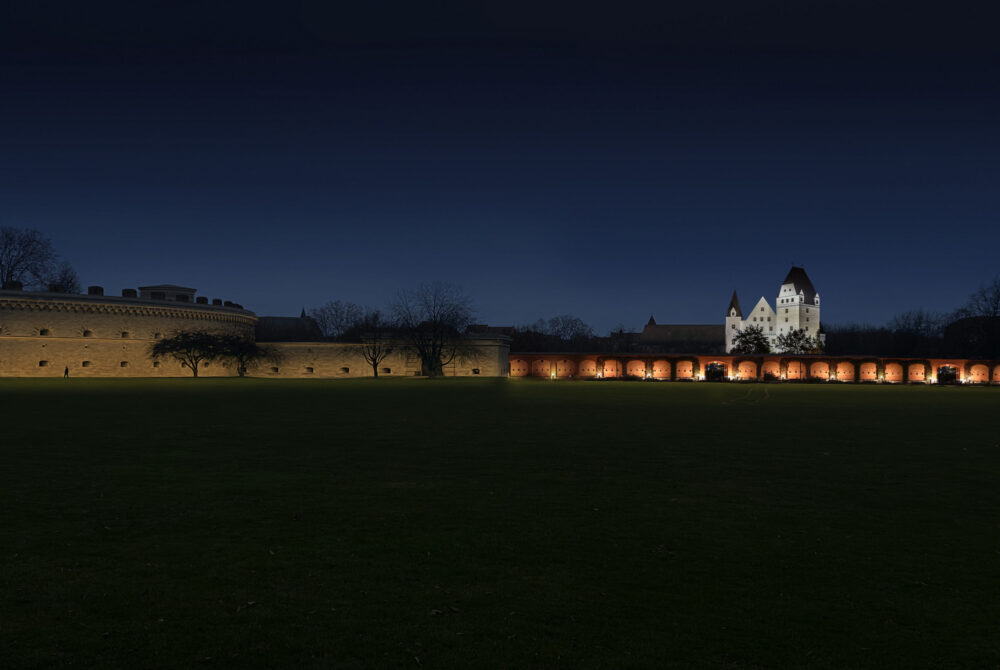
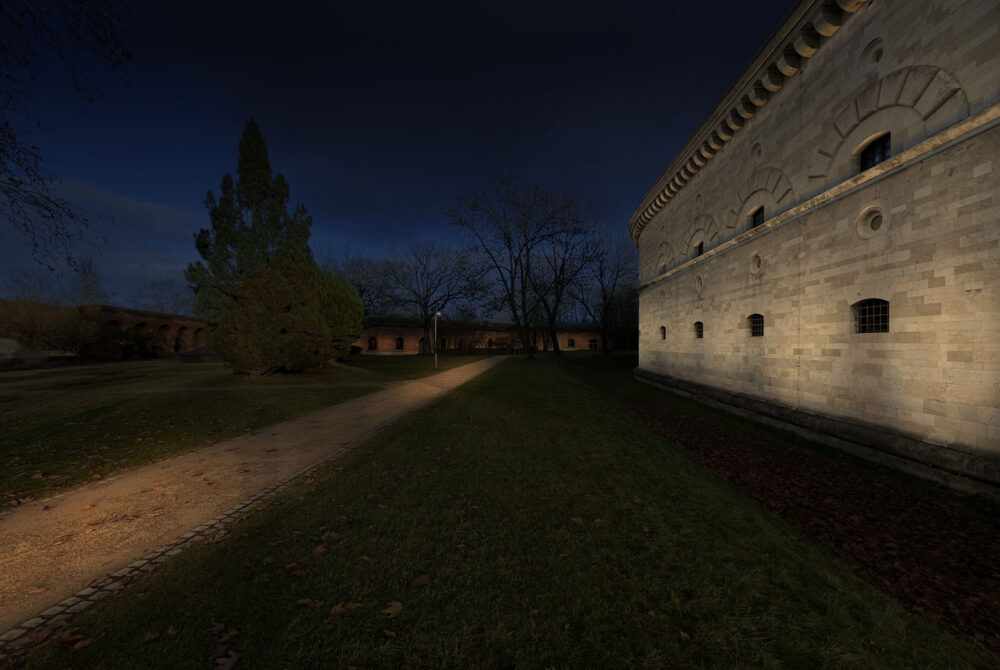
Klenzepark
Klenzepark

In traditional urban planning, darkness was long considered a deficit. It was equated with insecurity, loss of control, or planning failure. A contemporary lighting master plan reverses this perspective: darkness is recognised as a quality – ecologically, spatially, and aesthetically.
1. Darkness as a component of ecological systems

Many nocturnal animal species and insects rely on darkness for orientation, foraging, and reproduction. Artificial light fragments these habitats, particularly at transitions between urban and rural areas. A light effect that is restricted in space and time is a prerequisite for preserving darkness as a functioning ecological structure at all.

A lighting masterplan must systematically take these effects into account. It considers light not in isolation at individual locations, but as part of a coherent nocturnal system – with interactions between traffic areas, green spaces, bodies of water, development and the surrounding landscape.

A lighting master plan therefore also defines:

  • Dark rooms,
  • Dark corridors,
  • sensible transition zones,
  • time-limited lighting windows.

These principles apply regardless of the technology used. They are an expression of a planning philosophy that understands darkness not as a deficit, but as a quality worth protecting. Darkness is thus controllable, not accidental.

2. Spatial Differentiation and Protection of Sensitive Areas

Not every urban space has the same ecological resilience. The lighting master plan therefore works with spatial differentiation and prioritisation. Particularly sensitive zones – such as water bodies, green corridors, floodplains, natural peripheral areas, or transitions to open countryside – receive specific guidelines for lighting or deliberate non-lighting. The protection of darkness does not follow a dogmatic approach.

The crucial point is the spatial differentiation:

  • Different urban spaces require different qualities of light and darkness: urban centres require different qualities than green spaces, traffic areas different than water bodies, places for lingering different than purely transit zones.

Responsibility is shown in the conscious decision of where light is needed – and where it isn't.

The lighting master plan thus creates a robust basis for integrating ecological considerations into planning and approval processes at an early stage – rather than having to negotiate them retrospectively.

3. Darkness as part of urban quality

A sustainable approach to light means recognising darkness as a design and ecological resource. Quiet nightscapes, clear light-dark zones, and conscious contrasts not only improve species protection but also the perception and legibility of urban spaces. Orientation arises not from pervasive brightness, but from clear structures.

When used correctly, darkness not only increases species protection but also improves the quality of urban spaces.

  • clearer spatial hierarchies,
  • better orientation through contrasts,
  • greater visual calm,
  • stronger night image identity.

The light master plan shows that environmental responsibility and urban quality are not opposites. On the contrary: the reduction of light emissions often leads to a higher visual comfort, less visual disturbance and a stronger identity of the nocturnal cityscape.

Darkness is not the opposite of creation, but its foundation.

4. Responsibility as a fundamental planning attitude

Environmental and species protection cannot be achieved through isolated measures. They require a consistent approach across all levels of scale – from the strategic guiding principle to concrete implementation. The lighting master plan firmly anchors this approach and makes it manageable for administration, planning, and politics.

Responsibility is demonstrated not by making the maximum claim, but by the consistency of its implementation: light is limited where it is disruptive; used where it is necessary; and deliberately omitted where it offers no added value.

A lighting master plan anchors this approach bindingly for administration, politics, planning, and operations.
Nature conservation will not be an afterthought in this way, but an integral part of urban decisions.

Nature conservation in urban areas begins where light is not installed automatically.

Viewing darkness as a resource means taking responsibility – for the environment, for people, and for the long-term ecological quality of urban spaces. The lighting master plan makes environmental and species protection an integral part of lighting planning – spatially differentiated, with sound planning justification, and effective in the long term.
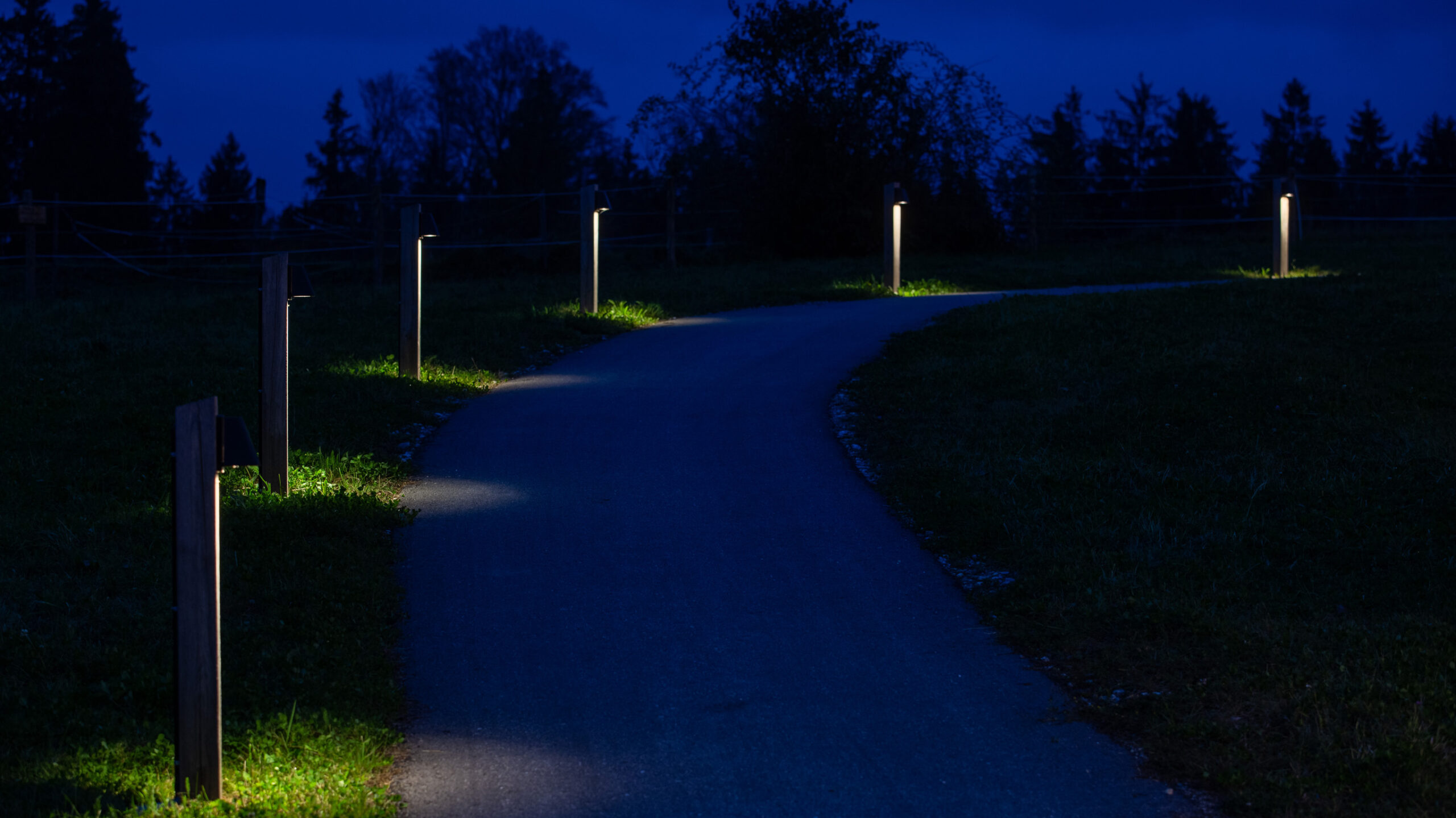
SOH Gut Sonnenhausen by MeierMohr bildbetrieb scaled jpg