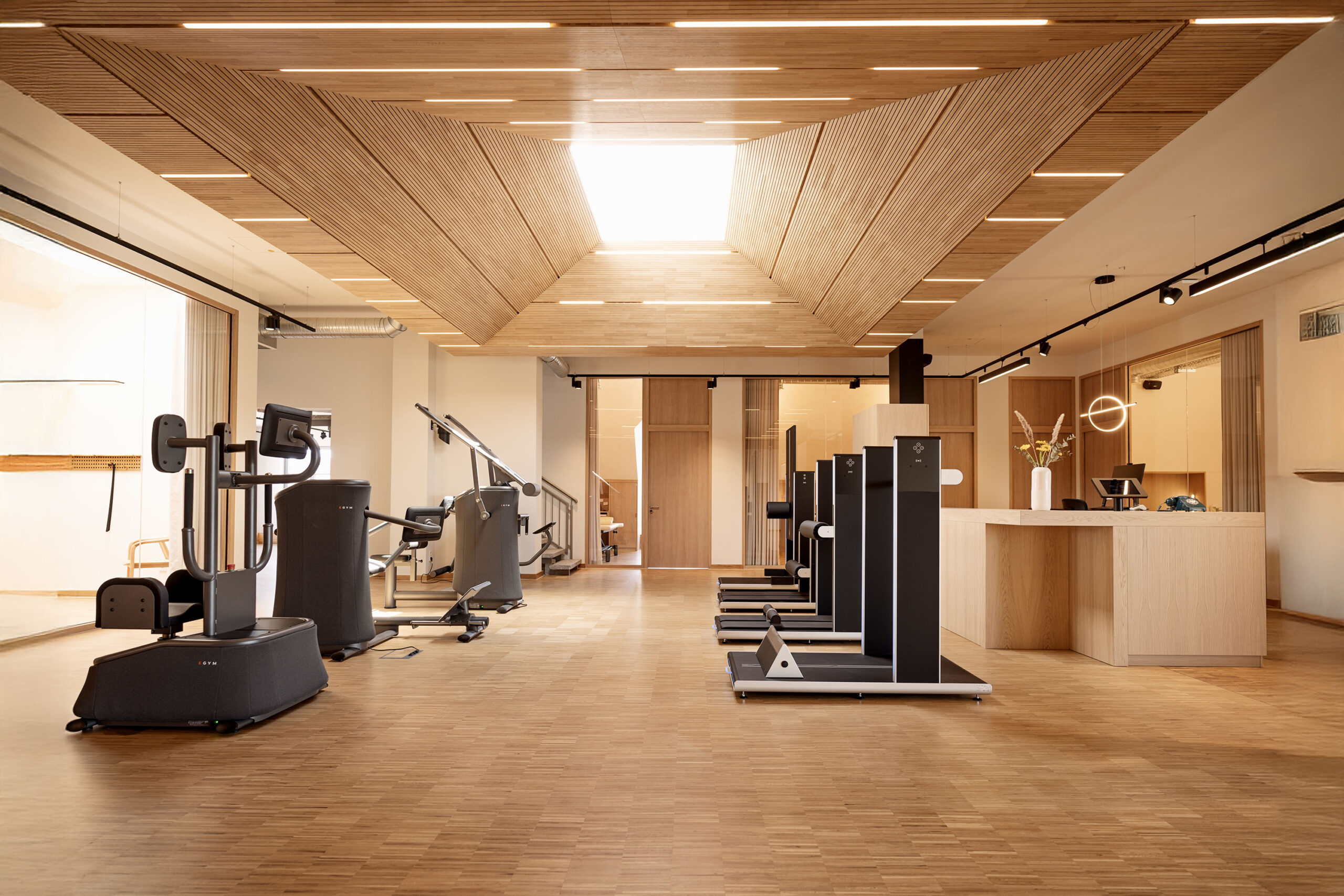
Lighting in healthcare settings is more than just „bright enough“. It must simultaneously facilitate medical precision, support orientation and safety, reduce psychological stress, and ensure energy- and maintenance-optimised operation. Especially in hospitals, medical centres, rehabilitation and care facilities, quality is achieved not through maximum values, but through differentiated planning according to room type, activity, time of day, and user profile.

In healthcare construction, vastly different visual demands meet: nursing routines, precision diagnostics, screen-based work, hygiene processes, night operations, and highly critical surgical procedures. Interior lighting must meet these requirements in compliance with standards, while simultaneously creating a calm, architecturally convincing spatial effect – without glare, without visual disturbance, without over-saturation.
A robust lighting plan in healthcare construction considers indoor lighting as a system with three levels:
1) Space-related basic lighting
It provides orientation, basic brightness and a consistent luminance level. Crucial factors are uniformity, glare limitation and a light distribution that also considers vertical surfaces (orientation, facial recognition).
2) Task lighting
For medical and nursing activities, targeted lighting components are required – from examination lights and workstation lighting to precise light fields in critical zones. Colour rendering, shadow reduction, glare control, and the reliable differentiation of tissue, skin tones, and materials are important here.
3) Scenes and operating states
Interior lighting must function differently during the day than at night, in normal operation than in an emergency, and in relaxation areas differently than in functional rooms. Predefined lighting scenarios make light plannable, repeatable, and operationally reliable – including clear operating logic for staff.
Patient room combine care functions and well-being. In addition to glare-free, ambient basic lighting, individually controllable elements (reading, orientation, and treatment lighting) are crucial – also for reducing disturbances in multi-bed rooms and during night shifts.
Examination and treatment rooms are multifunctional: Inspection, discussion, documentation, monitoring work. Lighting must therefore be both precise and glare-free, limit reflections on displays and be dimmable if necessary (e.g. for imaging procedures).
OP and highly critical functional areas meet maximum requirements: extremely high illumination levels in the operating field, shadow-free lighting, the highest colour rendering, hygienic design, and integration into medical technology systems. Simultaneously, a visually calm room environment is needed to reduce fatigue, adaptation stress, and misperceptions.
Human Resources, Workplaces and shift work require robust, ergonomic lighting quality. Interior lighting supports concentration, safe processes and the ability to orient oneself – especially during night and on-call shifts, without unnecessarily disturbing the patients' rest.