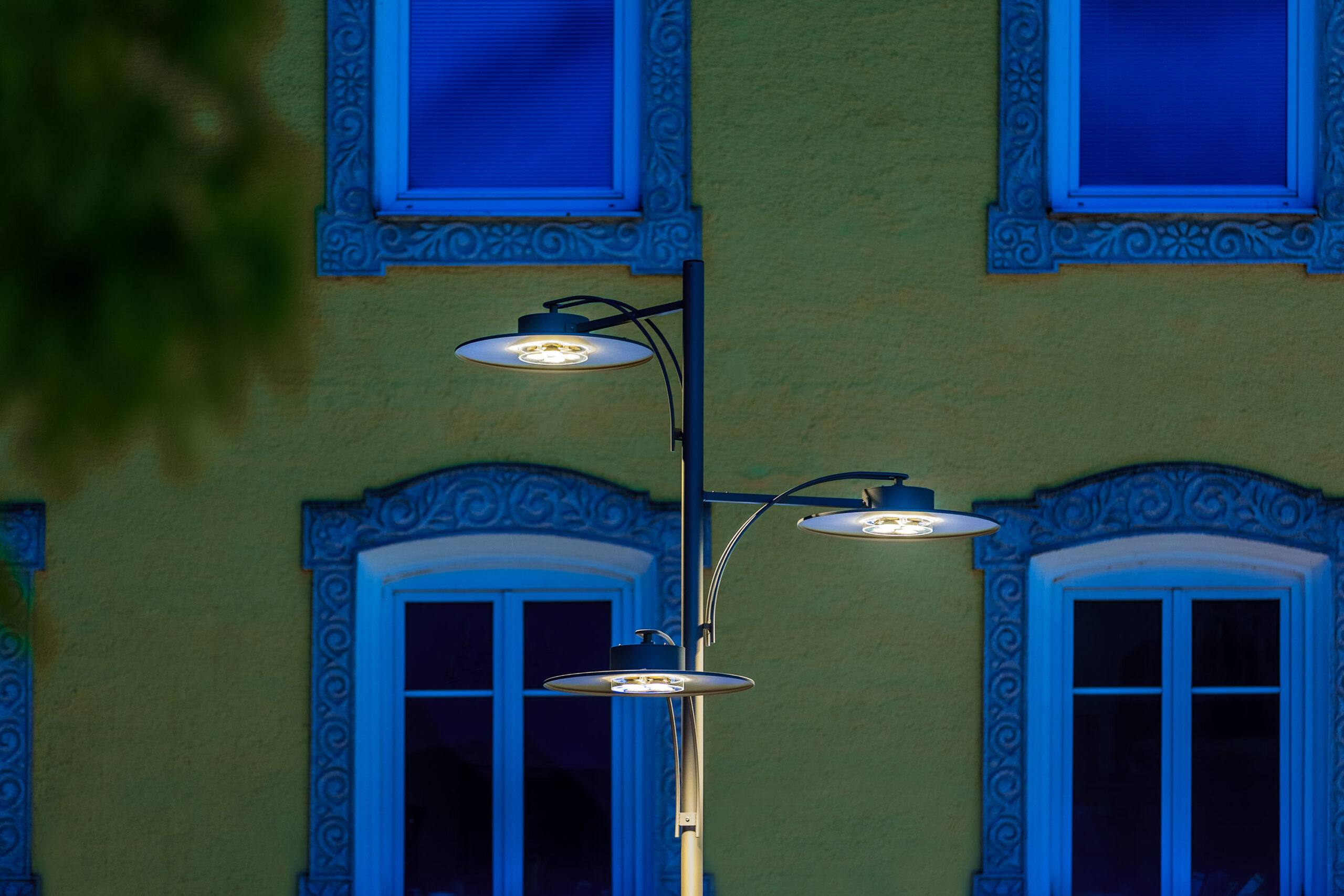
For decades, public lighting was primarily defined by its brightness. Good lighting was considered to be as bright, uniform, and widespread as possible – assessed based on measurable values such as illuminance or uniformity, not on visual quality. This way of thinking is deeply embedded in technical regulations, political decision-making processes, and the understanding of safety in many cities – and is long overdue for an update.
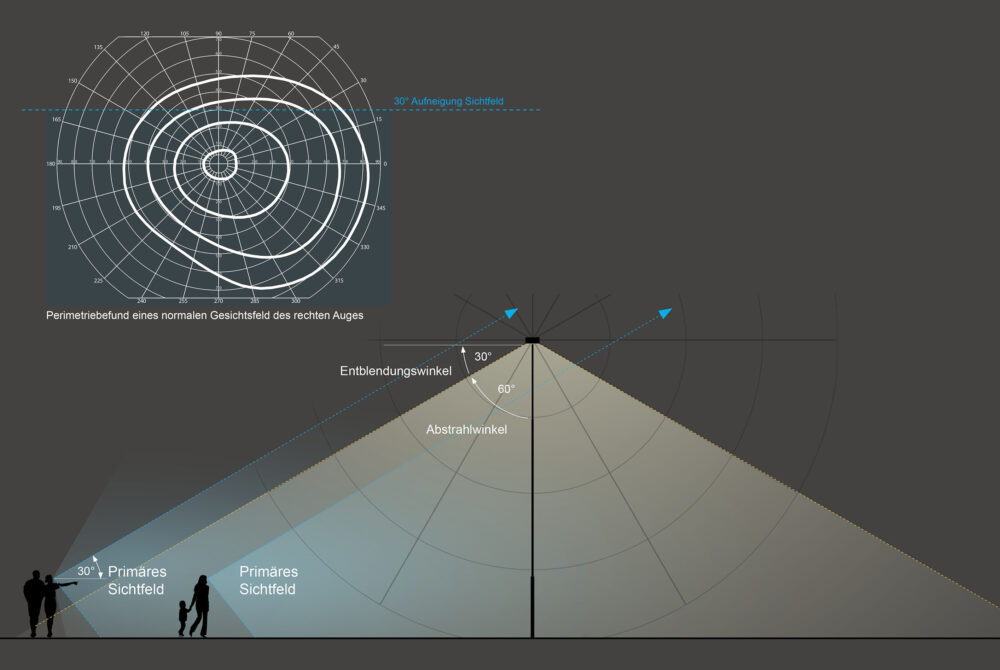
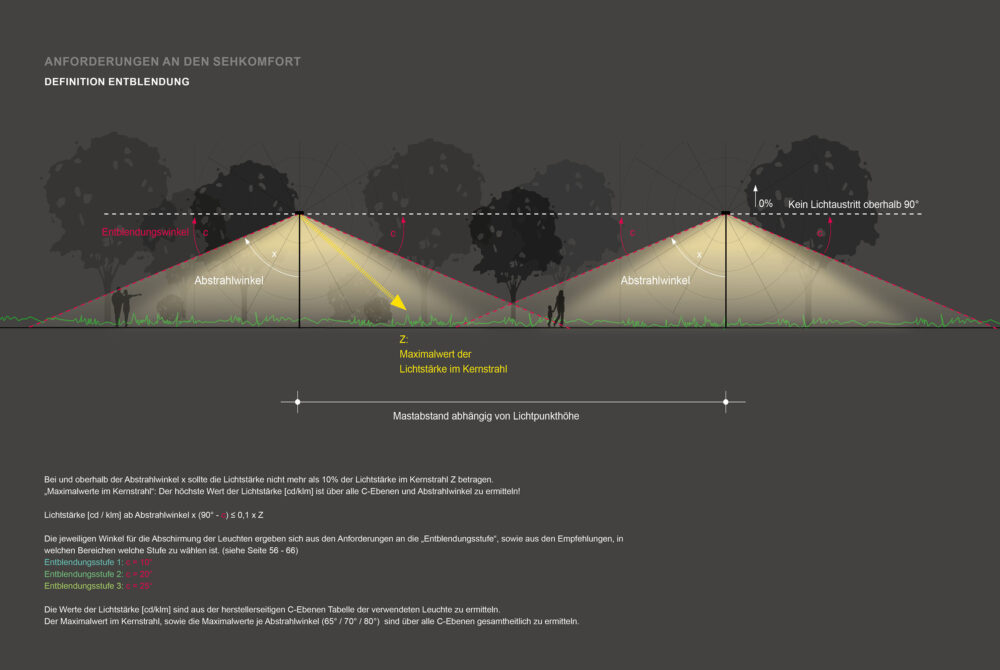
In practice, this logic frequently led to over-dimensioning. Out of uncertainty and the concern of providing „too little light“, lighting levels were increased without considering their effect in the space in a differentiated manner. The Ingolstadt light master plan consciously questions this paradigm – not for the sake of design, but based on physiological, perceptual psychological, and urban spatial findings.
The focus is on visual comfort: the quality of vision in nocturnal space.