Facade lighting

Lighting design

Facade lighting in lighting design

The targeted staging of building facades is a key design element of modern lighting planning – from both an aesthetic and a functional perspective. For municipalities, urban planners, property owners, and building authorities, high-quality facade lighting offers far more than just decorative added value: it creates orientation, strengthens the identity of urban spaces, and improves the feeling of nighttime security.
The temporary shutdown of numerous facade lights in 2023, in response to the energy crisis, highlighted the intangible value of illuminated architecture. Dark buildings in many places led to a noticeable loss in the quality of public spaces and emotional connection with the urban environment.
Thoughtful and responsible facade lighting not only highlights buildings but also gives cities an inviting face. It makes historical identity, architectural culture, and stylistic diversity tangible even at night. In our planning, we consider both energy efficiency and ecological requirements, as well as design aspirations. We analyse not only individual structures but also consider urban ensembles holistically – with the aim of creating atmospherically dense and functionally well-balanced nocturnal urban spaces.
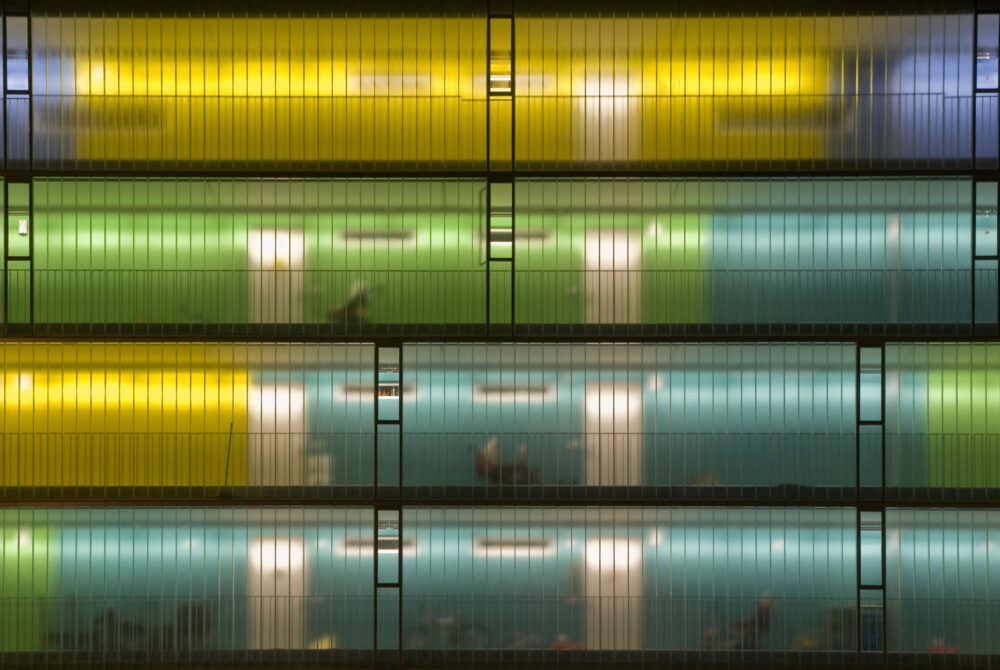
Munich residential building Innsbrucker Ring
Bietigheim-Bissingen Porsche

The significance of facade lighting in urban marketing

As Le Corbusier emphasised: „The eye looks horizontally“, and urban spaces are defined by horizontal building façades. Well-designed façade lighting shapes the cityscape, boosts city marketing and enhances the sense of safety for residents and visitors. It highlights architectural features and effectively showcases both historic and modern buildings – thereby elevating the city’s appearance to a new level.

Design effect and atmosphere

A lighting concept should consider the building's appearance and its role in the urban landscape. This includes integration into the existing cityscape and the creation of visual focal points – a positive perception of landmarks and attractions for the city and its cultural heritage. Whether churches, castles or contemporary buildings: different light intensities and colours set accents, direct the gaze and transform facades into visual attractions. The staging of landmarks thus promotes the cultural identity of a city and creates inviting, distinctive places. For tourists and for citizens' identification with their surroundings.


Facade lighting design

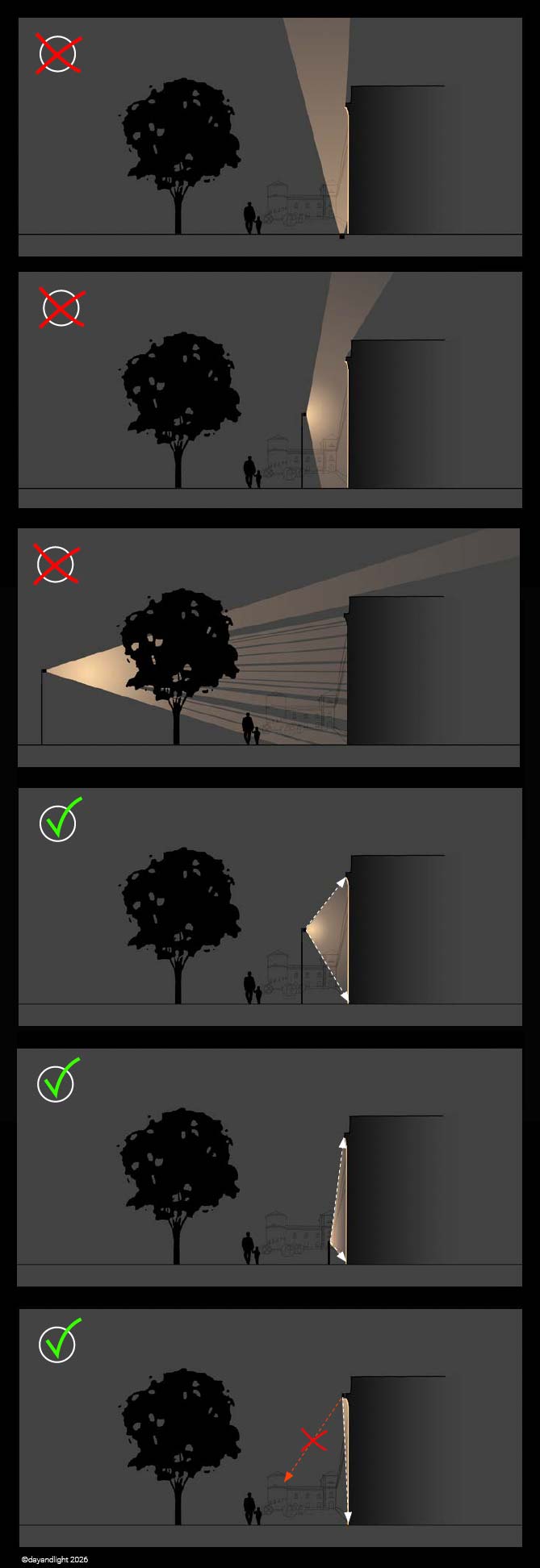
Through targeted light distributions of individual light points, as well as the conscious use of shadows and contrasts, the geometric structure and texture of a building are clearly highlighted. In contrast, large-scale, shapeless illumination causes the special features of the structure to fade quickly. Furthermore, carefully planned facade lighting should always be coordinated with the general lighting of the interiors.

Highlighting architectural details

The targeted use of integrated lighting tools can clearly highlight architectural details such as cornices or stucco. Lighting from the interior should always be understood as part of the overall presentation. Particularly adaptive lighting solutions in windows or facade elements further support the order and structure of the facade.

Play with light and shadow

The combination of differently positioned light sources – both close to the facade and at a greater distance – creates a dynamic interplay of light and shadow. This interplay lends the facade depth and underlines the plastic effect of the architecture.

Safety and Orientation

Well-thought-out facade lighting not only improves the visibility of buildings, but also aids in orientation in public spaces. At the same time, it helps to mitigate potential areas of fear and enhance the subjective sense of security. Large public buildings, in particular, appear less anonymous through targeted, subtle illumination and blend harmoniously into the nocturnal cityscape as friendly landmarks.

Energy efficiency and cost savings

Achieving maximum impact with minimal effort: well-planned façade lighting focuses on efficiency – both in terms of design and energy consumption. Modern LED lights combine high light output with low energy consumption and are characterised by a long service life. Their precise light control minimises stray light and reduces light emissions – a significant contribution to preventing light pollution. At the same time, maintenance effort and operating costs are significantly reduced.

Intelligent control systems

Digital control solutions and sensor-based technologies enable demand-oriented lighting control. This allows the lighting level to dynamically adapt to external conditions or usage times – in line with efficiency and sustainability. These systems not only allow for flexible lighting modes but also take ecological aspects into account: For example, lighting intensity can be automatically reduced or completely switched off during night-time hours – a benefit for people, animals and the environment.

Planning and implementation of facade lighting

Recording and analysis of the current situation

Any sustainable façade lighting project begins with a comprehensive assessment. This involves inspecting existing lighting systems, evaluating the electrical infrastructure and analysing structural conditions to identify potential mounting points. Particular attention is paid to the building fabric – especially in the case of older or listed buildings. The aim is to realistically assess the scope for design and technical feasibility at an early stage.

Consideration of legal and environmental requirements

Adherence to heritage conservation, urban development, and environmental regulations forms a central component of all lighting design. Neither the historical substance nor the appearance of protected structures may be adversely affected by fixings, heat load, or glare. At the same time, environmentally relevant aspects – such as the protection of nocturnal animals or the avoidance of light pollution – must be consistently considered and implemented. Professional lighting design therefore takes into account design objectives as well as ecological and legal frameworks.

Facade lighting dayandlight

References for facade lighting

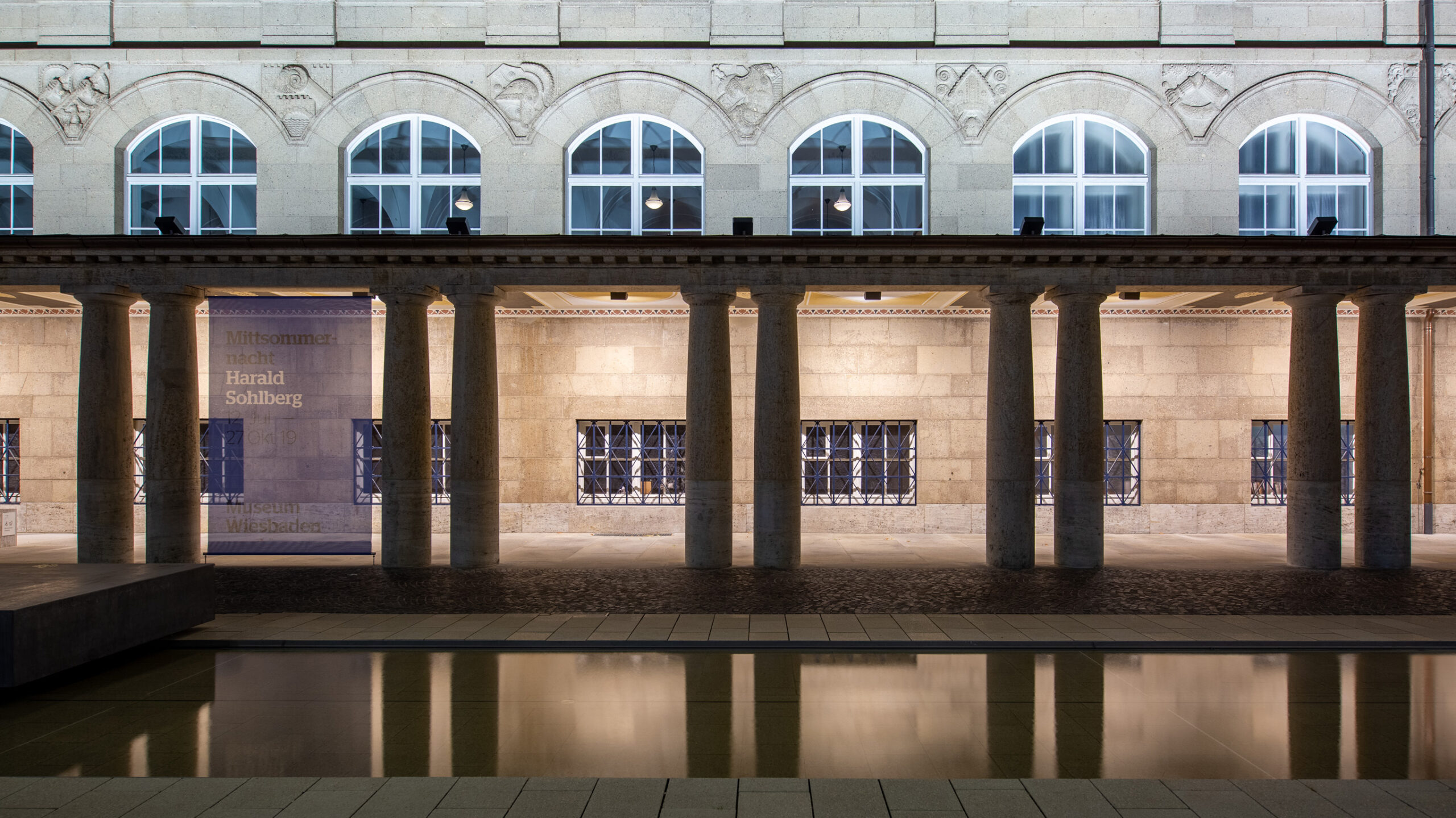
  • RheinMain CongressCenter Wiesbaden
  • Messe München
  • Porsche Service Centre Bietigheim-Bissingen
  • Munich-Freiham District Centre
  • Federal Intelligence Service

Bespoke consultation and planning

We begin with a detailed analysis of your needs and develop bespoke concepts. In doing so, we take into account the architecture of your building, its significance within the cityscape, and liaise closely with heritage protection authorities. We also address the interfaces between the various trades to ensure seamless integration.

Everything from a single source

Our service supports you from the initial analysis and planning right through to construction-phase consultation. We offer comprehensive maintenance consulting services and take care of illuminating the spotlights and coordinating the lighting scene. Read more

Are you planning facade lighting?

Whether for a new build, refurbishment or targeted accent lighting – we support you with individual lighting design tailored to your possibilities. Contact us for a no-obligation initial consultation on your specific project.
LMW Christoph Mittermueller scaled jpg