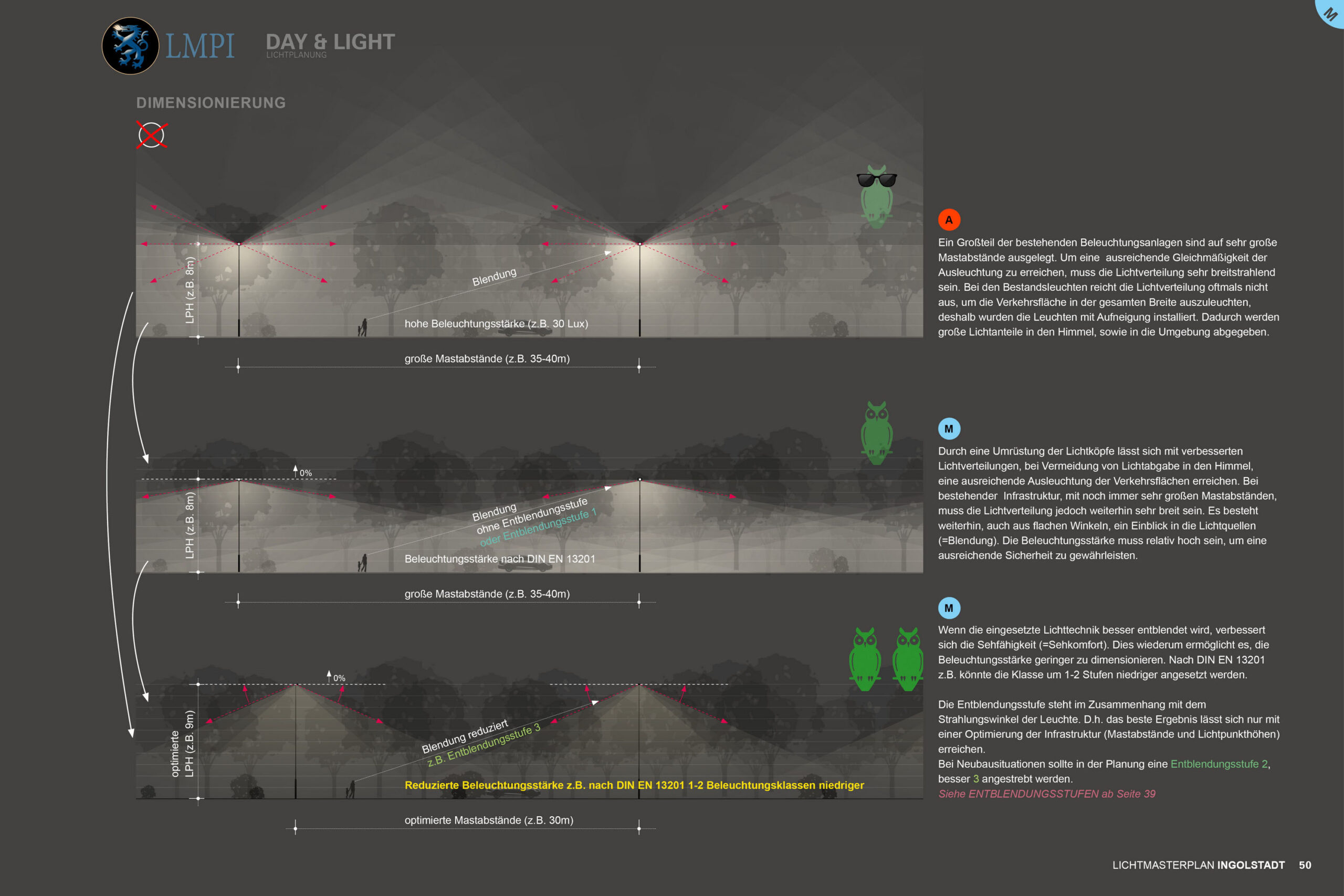
Cities today face the challenge of reconciling highly complex requirements in public spaces. Road safety, quality of stay, energy efficiency, climate protection, species protection, economic operation, and design identity all act on the same space simultaneously. Lighting design is not a downstream furnishing factor, but rather a strategic framework that directly influences all these levels.
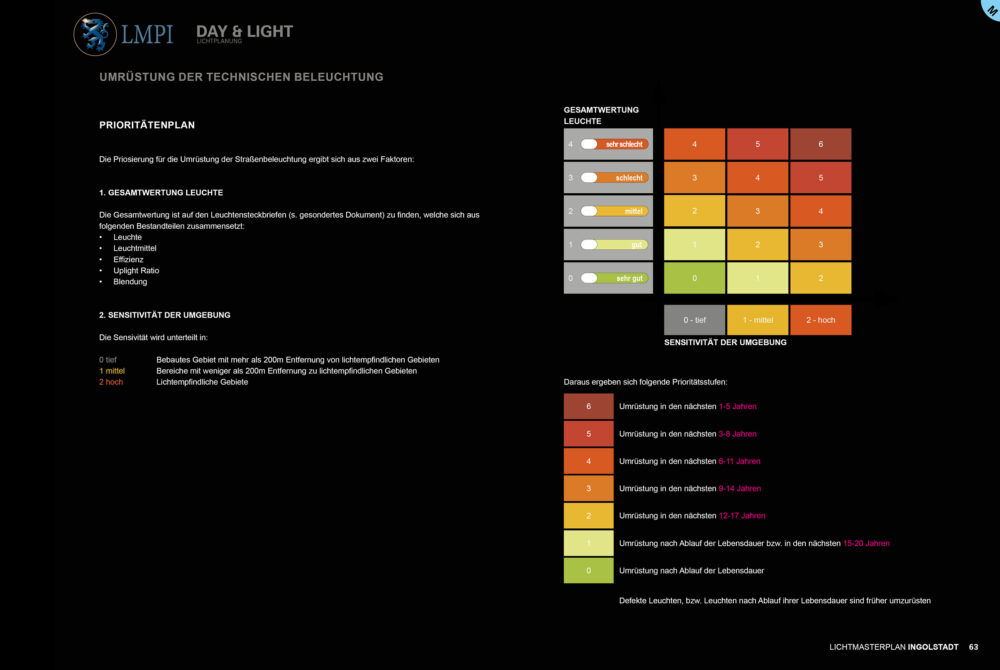
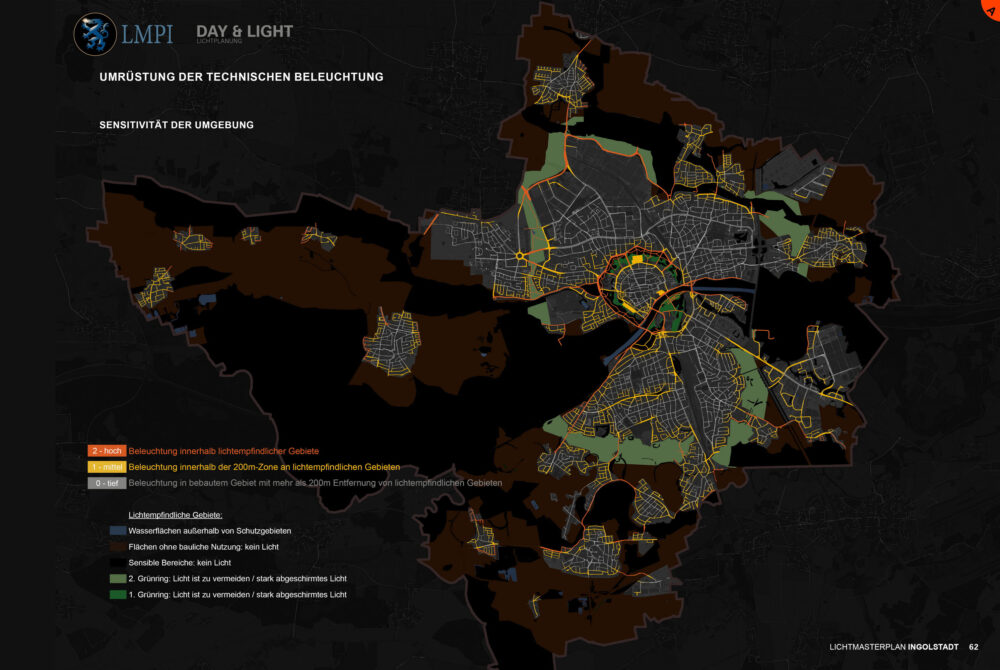
However, in municipal practice, light is often still treated in a fragmented way: street lighting primarily follows technical regulations, uncertainty or a lack of experience in individual projects lead to over-illumination, facade and accent lighting is decided on a project basis, and private and commercial light sources remain largely unregulated. The result is additive lightscapes that are neither functionally, aesthetically, nor ecologically convincing, and whose effects reinforce or counteract each other. A consistent, legible nightscape therefore does not emerge.
A lighting master plan tackles this very issue. It detaches lighting from the level of individual measures and establishes it as an overarching strategic planning instrument.