A lighting masterplan is not a lighting catalogue or a collection of technical specifications. Its quality arises from the methodology with which urban space is analysed, assessed, and translated into a feasible lighting strategy. The order is crucial here: the fixture is not the starting point, but the space.
The methodology of a lighting masterplan begins with reading the city – by day and by night. The aim is to understand the urban structure with its spatial connections, historical, economic and functional contexts, as well as uses and atmospheres, before design or technical decisions are made.
Among other things, the following are being investigated:
This analysis prevents light from being distributed uniformly. It lays the groundwork for a differentiated perspective and a precise allocation of requirements.
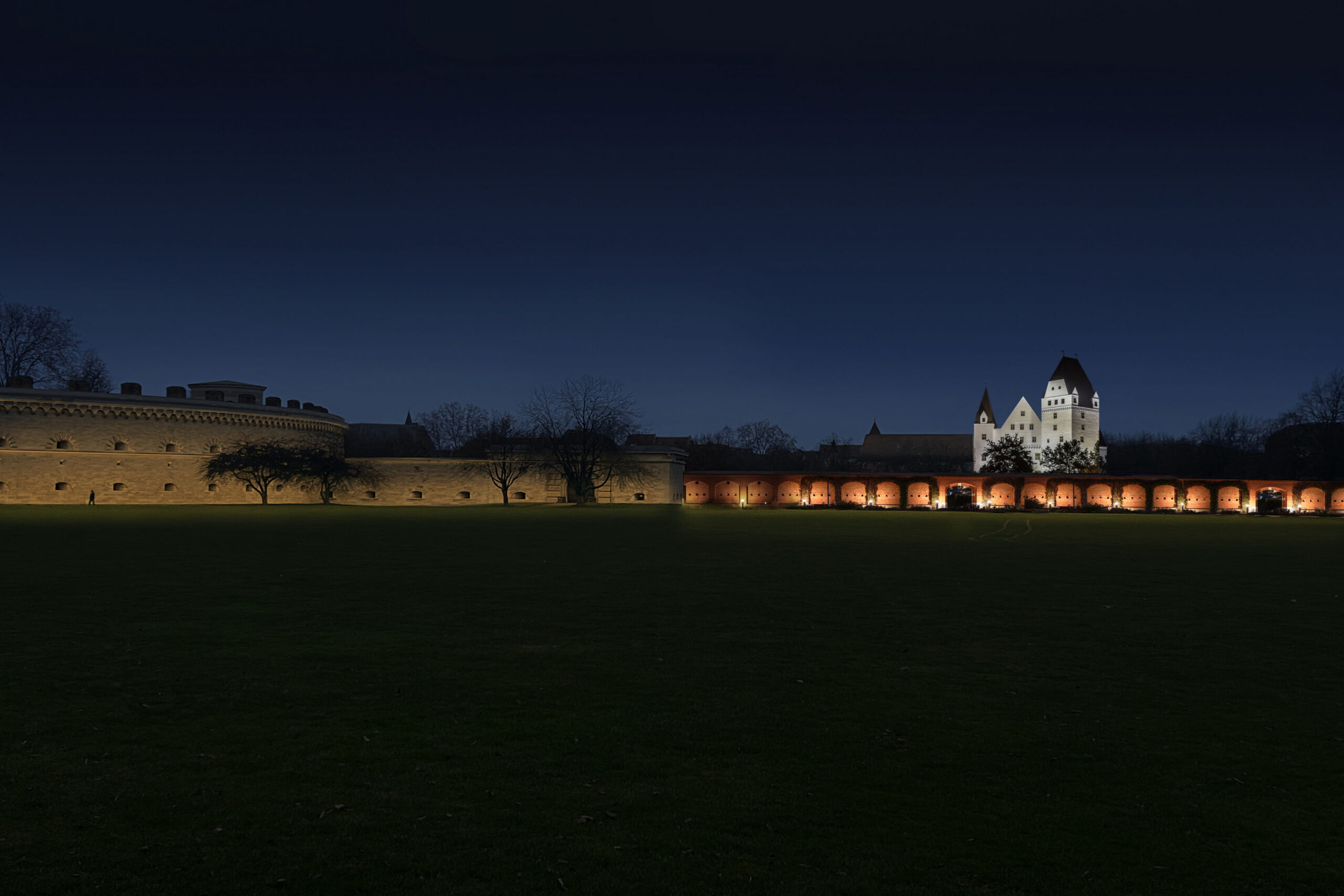
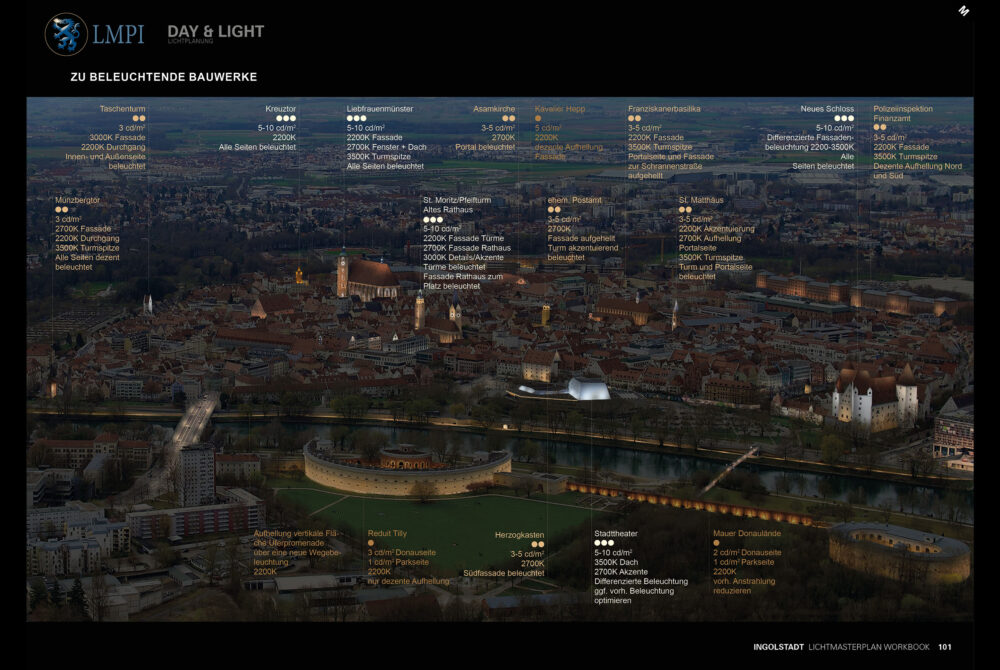
A central methodological step is the analysis of the existing night-time image. This is not about illuminance levels or standard values, but about perception and effect:
This analysis also explicitly takes into account private, commercial, and temporary light sources. Only the interplay of all light sources results in the actual night-time appearance of the city.
The Lighting Masterplan initially translates these observations into qualitative assessments, not actions. It makes structural problems visible, rather than just treating symptoms.
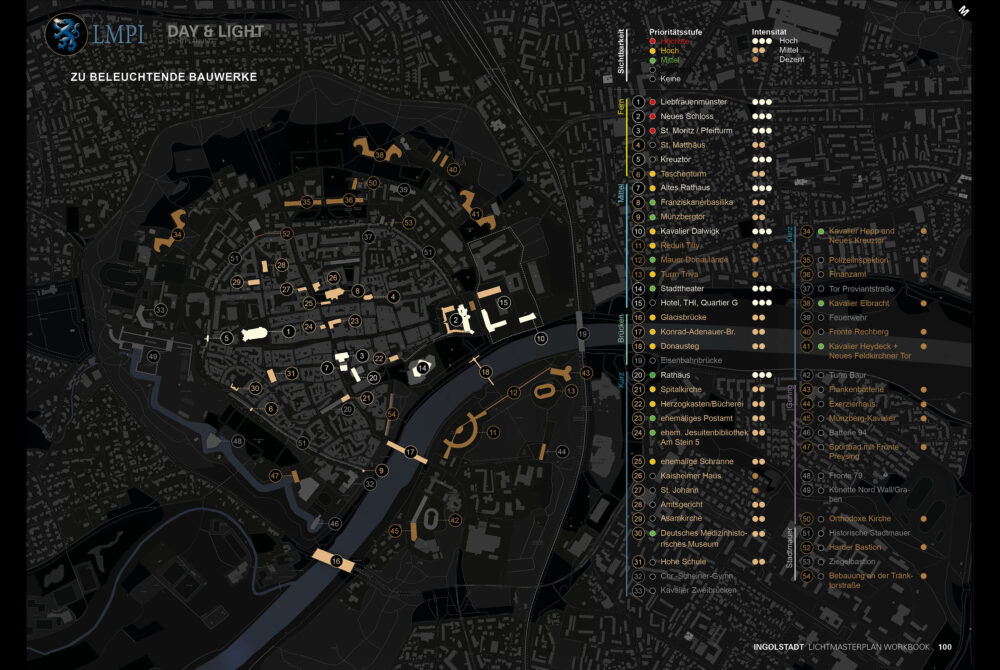
Based on the analysis, urban spaces are typologically classified. This classification is a central methodological element as it forms the basis for subsequent decisions.
Typical categories include:
Each room type is assigned a light role. This does not describe how bright a room is, but rather what function light serves there: safety, orientation, identity, reticence, or deliberate darkness.
This allows for functional differentiation of light – a crucial step away from blanket lighting levels.
Overarching visions are developed from the space categories. They formulate how the nocturnal cityscape should appear – spatially, atmospherically, and in its overall context.
The central guiding questions are:
What should the overall overnight comprehensive picture look like?
Which urban areas carry identity, and which should deliberately recede into the background?
How can historical and contemporary structures be depicted in a differentiated manner?
These guiding principles are translated into design principles, such as:
Brightness conditions and contrast guidance
Colour temperatures and spectral neutrality
Light management, glare control and scalability
They form the binding framework for all subsequent projects – regardless of whether they involve street lighting, square design, or special lighting.
A key feature of the methodology is the balanced consideration of different requirements. Safety, visual comfort, species and environmental protection, and energy efficiency are not treated in isolation but are brought together.
Specifically, that means:
Safety requirements are met through light quality, clarity, and appropriate brightness levels – not by maximising the amount of light.
Ecological aspects are incorporated through light management, shielding, spectral selection, and temporal control.
Operational aspects such as maintenance accessibility, robustness, and life cycle are considered within the conceptual framework without anticipating project-specific detailed planning.
The lighting master plan thus becomes an instrument that does not avoid conflicting objectives, but rather tackles them in a structured manner.
The methodology does not end with abstract guidelines. A lighting master plan must be practically applicable. Therefore, the principles developed are translated into actionable levels:
Prioritising rooms and measures
Definitions of short-, medium- and long-term development steps
Recommendations for new builds, renovations and conversions
Clear interfaces to other specialist planning and processes
Crucially: the lighting master plan does not specify individual projects. It establishes a stable decision-making framework within which projects can be developed with quality assurance.