„Architecture is the artful, precise and magnificent interplay of building forms gathered under the light.“ Le Corbusier’s philosophy is more relevant today than ever. In a world of technical overload, we do not view light as a decorative add-on, but as a primary, albeit invisible, building material. At DAY & LIGHT, we combine the physical precision of planning with the atmospheric power of architecture.
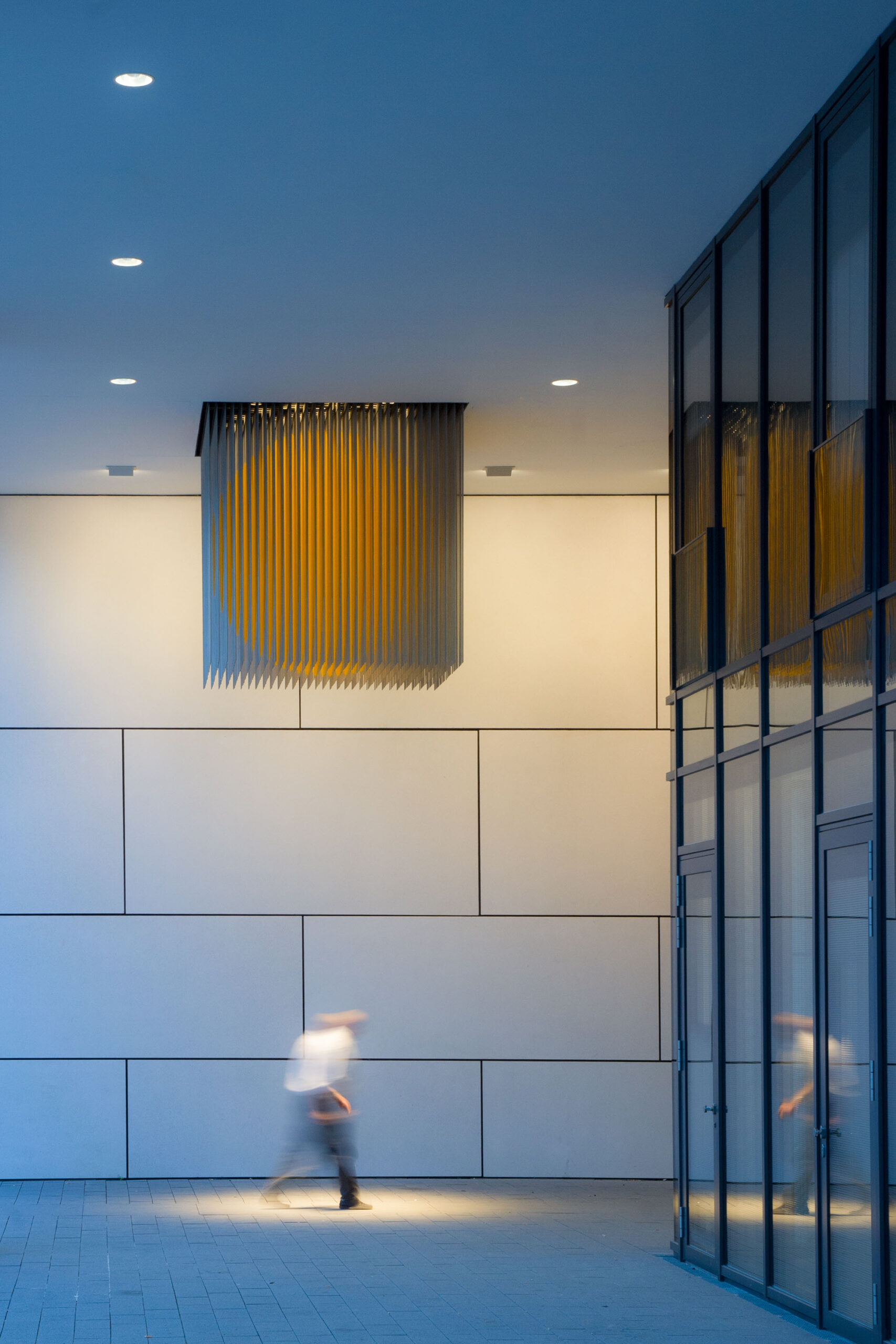
Fundamentally, humans are designed for life outdoors. Yet today, we spend 90 percent of our time indoors. While electric light has only existed for around 150 years, daylight has shaped our biology over millions of years. In our work, "Non-Visual Effects of Light," we therefore understand light not as an additional function of a luminaire, but as a fundamental physiological reaction of the organism to its environment.
For us, Biophilic Design is not a trend, but a necessary return to natural parameters. We reintegrate daylight, materiality and dynamism into interior spaces to synchronise people with their circadian rhythm – a task that is particularly crucial in healthcare facilities and work environments, influencing well-being and recovery.
In modern architecture, lighting design has become complex; it can no longer be treated as a purely facade issue. We begin in darkness. A room, a public space or a building is, for us, a black canvas, which we bring to life through light in a careful process.
This design aspiration guides us in lighting design for architects and developers.
A true sense of well-being is created where light is used not merely for illumination, but to „enhance the experience“. Like the light artist James Turrell, we seek to create a space for perception – a pure interplay of light and shadow that escapes the sensory overload and symbolism of our times.
Even in outdoor spaces, light becomes part of the spatial arrangement. It structures paths, squares, and facades by differentiating visibility. We make architecture legible without overwhelming it.
At DAY & LIGHT, safety is not achieved through maximum brightness, but through clear conditions and distinct transitions. Whether illuminating bridges or designing underpasses, light forms a bridge between people and space. In doing so, we always act with our environmental impact in mind: we minimise light pollution and protect the night-time skyline of our cities through responsible urban lighting.
