Interior lighting of architecture

Lighting design

Architectural and spatial understanding in interior lighting

At DAY & LIGHT, we view interior lighting as a fundamental component of the overall spatial design – always with a focus on people. Light influences far more than just the visual impression of a building; it creates atmospheres and evokes emotions. Through carefully designed interior lighting, we support specific visual tasks and functions within the space, enabling the architectural vision to be fully experienced.

„Light, space, and architecture are the elements from which architecture is made.“

This guiding principle from Mies van der Rohe accompanies us in the design of our lighting solutions. Light forms the bridge between people and space and defines the visual framework of architecture.

Lufthansa Aviation Centre scaled JPG

Principles of Integrated Lighting Solutions

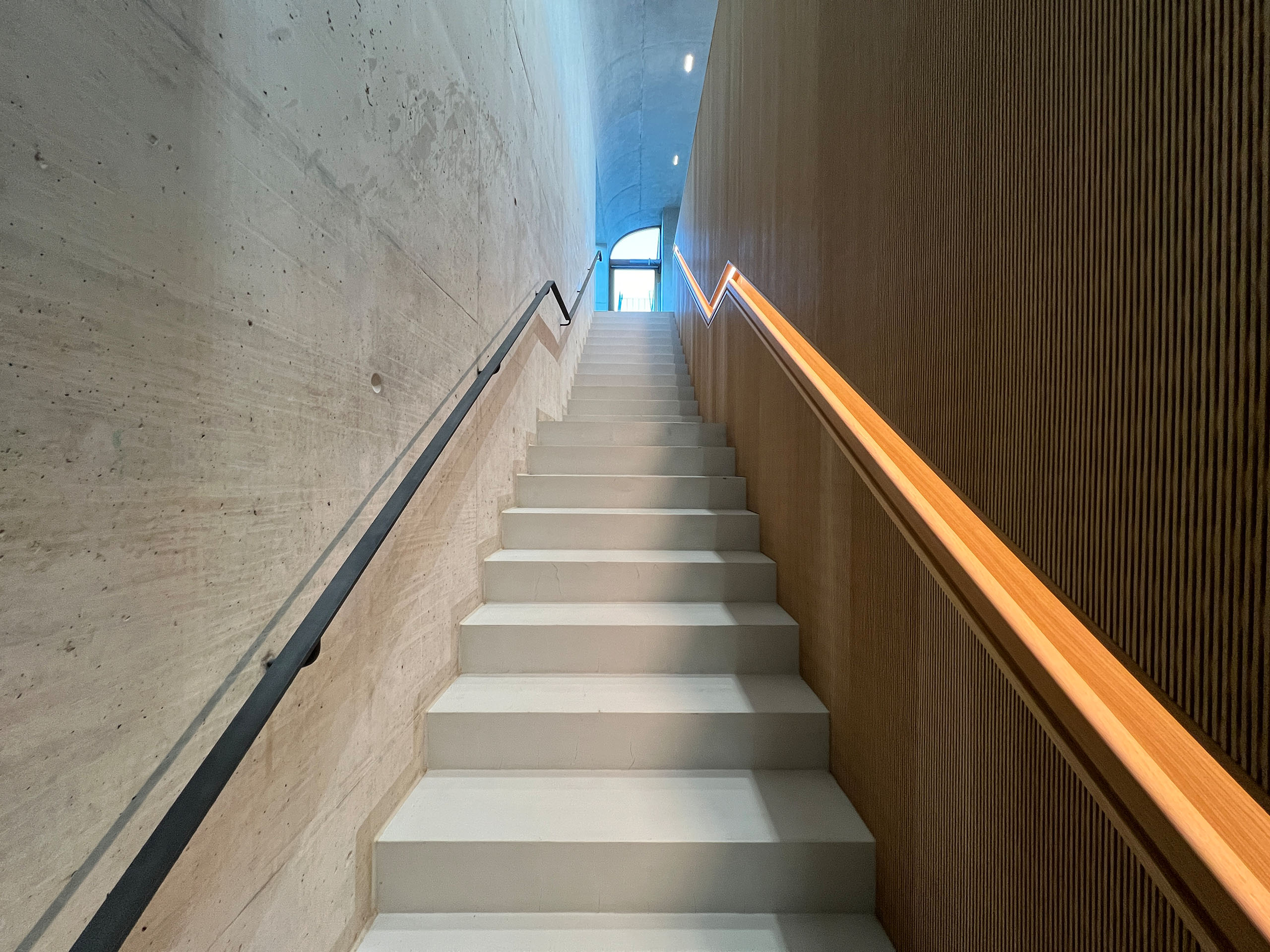
At DAY & LIGHT, we integrate interior lighting into the architecture in such a way that the luminaires often remain invisible or unobtrusive, allowing only their effect to unfold within the space. These invisible light sources are incorporated into ceilings, walls or architectural features to prevent glare and distraction. This enables precise light control that enhances the space as a whole and highlights the architectural features.
Lighting control and adaptability are key aspects of modern interior lighting. Modern lighting control systems make it possible to flexibly adjust the lighting to different requirements and moods. By controlling brightness and colour temperature, we create a lighting environment that meets both functional and aesthetic needs. This adaptability ensures that the light can dynamically respond to different times of day and year, as well as various usage scenarios.

Luminance and its importance in interior lighting

Luminance plays a central role in interior lighting, significantly shaping the perception and atmosphere of a room. It describes how bright an illuminated surface is perceived by the eye, depending on the illuminance and the reflectance of the surfaces. The ratio of luminances to each other is crucial, as too high a luminance can lead to glare and impair the perception of other surfaces.
To better understand luminance in indoor lighting, let's consider the following formula:

L = E · ρ / π

Here, the variables stand for:

  • L: Luminance – This is the measure of the brightness emitted from an illuminated surface and perceived by the human eye.
  • E: Illuminance – The amount of light falling on a surface, measured in lux. It indicates how much light energy per unit area falls on a specific surface. Illuminance alone is measurable but not visible.
  • Reflectance – The properties of the material: colour, brightness, scattering behaviour and absorption, as well as transparency.
  • Surfaces with a high reflectivity appear brighter.
  • π: The circle constant Pi – A mathematical constant that ensures the relationship between illuminance and luminance scales correctly.

The interplay of lighting design and architecture in interior lighting

Close collaboration between lighting designers and architects is essential to achieving the desired visual and physical outcome for interior lighting. The reflectance of surfaces, which is determined by the architecture, has a significant influence on how light is perceived within a space. At DAY & LIGHT, we ensure that these architectural decisions achieve the desired visual effects and enhance the perception of the space in line with the architectural vision.

Requirements of light for humans

For most people, the majority of perception is visual, and as we spend 90 percent of our lives indoors, thoughtful lighting design significantly impacts our quality of life. Interior lighting combines architecture and light to create a harmonious and functional environment that supports natural biorhythms and promotes well-being.

Applications of interior lighting

At DAY & LIGHT, we plan every project in close collaboration with clients, as well as building and specialist designers. Our lighting solutions include:

Workplace lighting We individually adapt the lighting to specific visual tasks to create optimal visual conditions. This includes planning illuminance, contrast optimisation, and adjusting luminance in relation to the adaptive behaviour of the human eye, taking into account the overall spatial perception as a working environment.

Dynamic Lighting Control Taking daylight into account, we create dynamic lighting with artificial light that adapts to the natural course of the day and the seasons. This can be achieved by adjusting the brightness and colour temperature of the light throughout the day, in order to support the users' natural biorhythms.

Orientation Light also has the task of making spatial and transitional zones legible, making dimensions recognisable, and supporting intuitive orientation. This is achieved through the correct use of luminance, light intensity, light rhythm, and light colour.

Further information on interiors

Standards and regulations for interior spaces are of paramount importance for every project. At DAY & LIGHT, we place great emphasis on interpreting and applying these standards correctly. We know that legal requirements alone are not sufficient to create bespoke lighting solutions. That is why we provide our clients with comprehensive advice and develop lighting concepts that go beyond mere regulatory requirements to deliver high-quality lighting solutions. We would be happy to discuss the best lighting for your requirements. Please feel free to contact us to find out more about the impact of interior lighting.
Mittenwald Museum