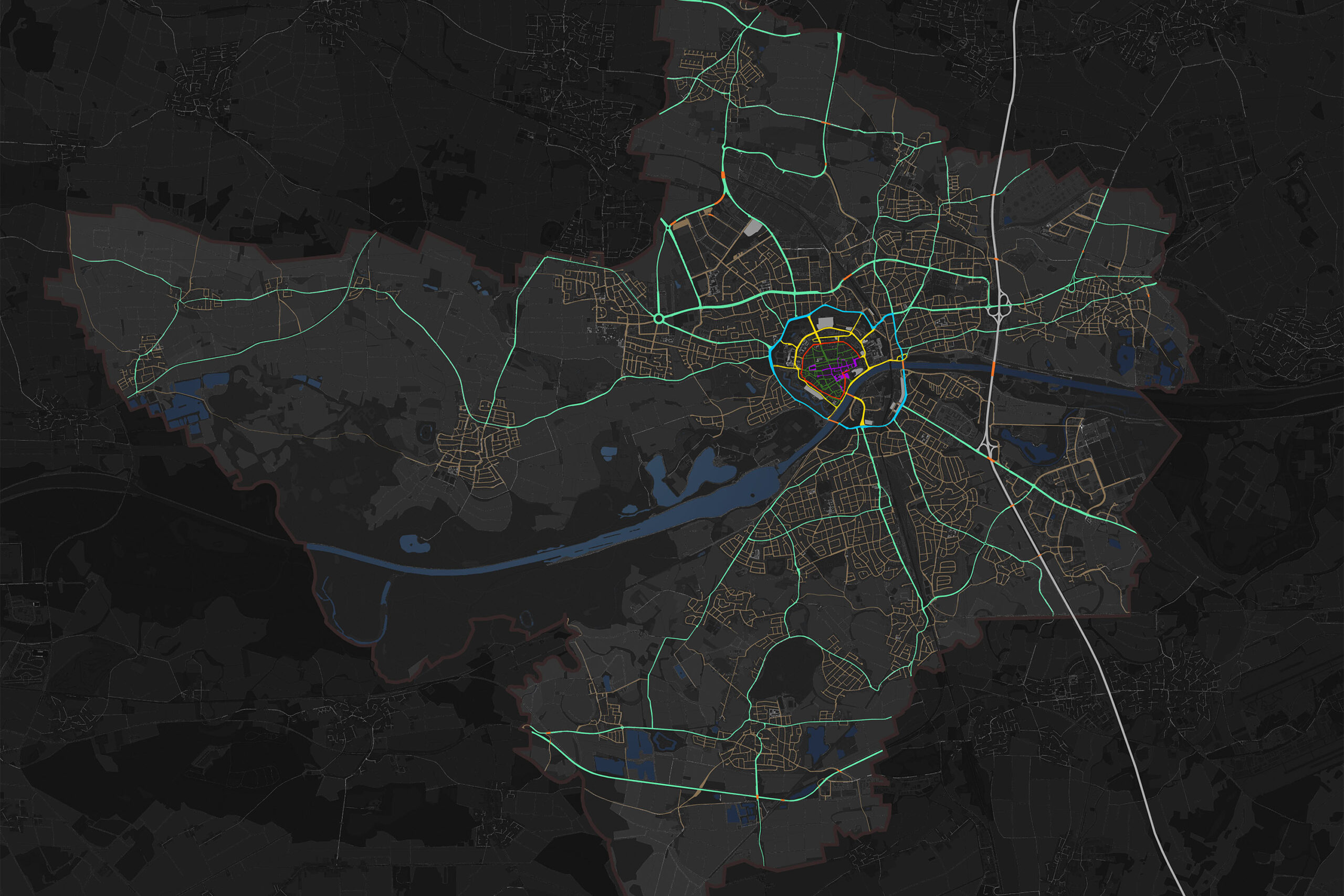
Light is not an end in itself – and its ecological impact is often underestimated. Modern lighting design doesn't just ask where light is needed, but also where it should be deliberately avoided. It considers spectrum and direction, the overall perception of the environment, minimises intensity and glare, uses intelligent control systems, and integrates environmental and species protection from the outset. Only in this way can the cities of the future become safe and functional at night – and at the same time ecologically vibrant.
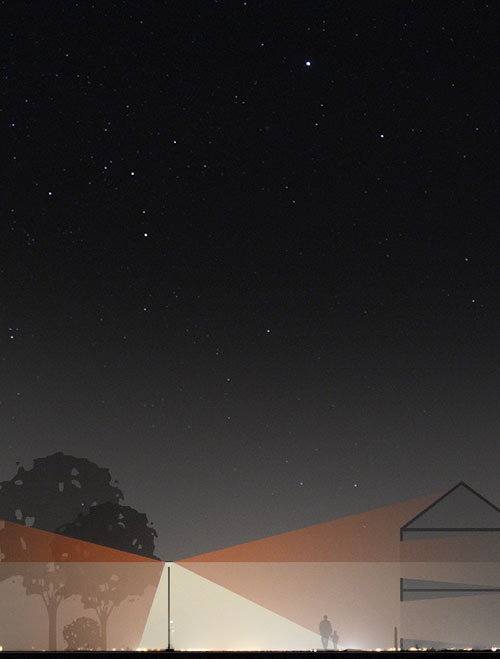
Artificial light brightens the atmosphere and changes ecosystems. Nocturnal animals and insects react sensitively to the spectrum, intensity, and direction of artificial light. Maintaining or creating dark corridors, reducing blue components in the light spectrum, and creating ecologically functional urban habitats are now the responsibility of local authorities. An increasing number of countries are therefore reacting with specific rules, such as not emitting light above the horizontal, not using light colours above 2200 K in sensitive zones, and reducing or switching off facade lighting from certain times. They all pursue one goal: preserving the night as a valuable habitat.
In Germany too, light emissions are considered a potential environmental burden. The Federal Immission Control Act (BImSchG) classifies them as harmful if they endanger or significantly impair people, animals, or plants. Several state laws, such as the Bavarian Immission Control Act (BayImSchG), stipulate lighting restrictions for illuminating public buildings after 11 p.m. until dawn.
Important: In most federal states, there is no legal obligation to illuminate public roads or squares. Municipalities can and should develop their own standards that balance safety, functionality, and ecology.
Nature conservation and light pollution are no longer niche issues, but key topics for responsible urban development. They affect quality of life, biodiversity, health, and energy consumption equally – and demand a new understanding of light: away from quantity, towards quality. Those who think of light as part of urban ecology not only design cities more sustainably, but also create spaces that remain liveable even at night.
The following chapters delve deeper into these topics, demonstrating how ecological lighting design can be shaped today – from legal frameworks and light control to concrete strategies for municipal practice. It becomes clear here: lighting design of the future means not just more light, but above all better light – more targeted, gentler, and more effective.
From the Loss of Night – why darkness is becoming a planning challenge today
The night is disappearing – and with it, a fundamental part of our natural and urban environment. Around 60 per cent of Europeans can no longer see the Milky Way; in urban areas, this figure rises to over 90 per cent. Even rural areas are now affected by a permanent brightening of the night sky – a phenomenon known as skyglow.
What was long considered a sign of progress – the nocturnal brightness of urban spaces – is increasingly becoming an ecological, health, and societal challenge. Light pollution not only changes the sky above our cities, but also the habitats beneath them.
Artificial light influences biological rhythms, disrupts migratory movements and reproductive behaviour in numerous animal species, and significantly contributes to the decline of insect populations. Plants alter their flowering cycles, while humans face disrupted sleep, hormonal changes, and health burdens due to constant illumination.
Urban Ecology in Transition – Lighting Planning as a Strategic Task
These developments make it clear: light is no longer purely a technical issue. It has become an ecological and urban planning variable that significantly influences the quality of urban living spaces. Urban planning and environmental policy face the task of creating a new balance between safety, functionality, biodiversity, and quality of life.
Where brightness was once equated with safety and progress, the quality of light now counts – and the ability to consciously protect darkness. Dark areas are not deficits, but part of a sustainable urban strategy: they preserve ecological networks, enable natural nightscapes, and contribute to healthy living conditions.
Lighting design thus takes on a key function in the context of urban ecology. It decides, prioritises, optimises and negotiates between urban design, traffic safety and the promotion of biodiversity, the creation and keeping open of dark corridors for nocturnal animals, as well as the creation of climate-friendly habitats.
From technology to strategy – a paradigm shift
The new role of lighting planning demands a rethink at all levels. It can no longer be limited to illuminance levels and maximising pole spacings, but must be considered as an integral part of an overarching urban strategy – comparable to noise protection, air quality control or land sealing, especially as it is a significantly more complex field.
For municipalities, this means that light pollution now belongs in the same category as other environmental factors. It influences the ecological quality of neighbourhoods, the health of the population, and the perception of urban spaces. Only through strategically coordinated lighting planning can cities ensure that they remain not only functional and energy-efficient, but also ecologically sustainable.
Designing future-proof cities isn't just about light, but also about darkness. Protecting darkness protects habitats – and enhances quality of life.
Light as an environmental factor – legal classification in the Federal Immission Control Act
Artificial light is no longer treated as a purely technical factor in German environmental law, but is considered a potentially harmful environmental impact. The Federal Immission Control Act (BImSchG) classifies light emissions similarly to noise or air pollutants – with correspondingly far-reaching consequences for planning, approval, and operation.
Whether a light source is legally relevant is determined by its effect: type, duration, and intensity play a central role, as does the question of whether nuisances or impairments arise for people, animals, or protected areas.
Since 2012, the LAI guideline from the Länderausschuss für Immissionsschutz (Committee of the Länder for Immission Control) has served as the central reference guide for assessing light immissions. It defines practice-oriented limit values depending on the area type (e.g., residential areas, commercial areas, nature protection areas) and is regularly used by environmental authorities and administrative courts.
§ 53 BNatSchG – Reduction of light as part of species protection
With the amendment to the Federal Nature Conservation Act (Section 53 BNatSchG) in 2021, the legislator clarified that artificial light is considered a detrimental interference with nature and landscape in certain cases. Consequently, particularly strict standards must be applied in planning and operation, especially in or near protected areas (e.g. FFH areas, biosphere reserves, Natura 2000).
Are specifically regulated:
These regulations have a direct impact on lighting design and have now been made binding in many state laws and municipal ordinances.
Nationwide ban since 01/01/2022: Skybeamers and similar widely visible lighting systems whose effect extends beyond the property boundary (§ 53 para 1 BNatSchG).
Regional legal requirements – shutdown obligations as a species protection measure
In addition to federal law, all federal states have now introduced their own regulations restricting the nighttime illumination of public buildings. The aim is to reduce light emissions during the ecologically sensitive night hours (10:00 PM/11:00 PM to 5:00 AM/6:00 AM).
Affected parties include, but are not limited to:
Outdoor advertising systems are also subject to time restrictions. Many countries have also introduced a permit requirement for permanent lighting – regardless of the commercial purpose.
Municipal sovereignty – more scope than is often used
An often overlooked aspect: there is no legal requirement for street or facade lighting. Neither road law nor the road traffic regulations (§ 45 StVO) stipulate that public spaces must necessarily be equipped with artificial light. Only visibility ranges, not light sources, are mandatory.
For local authorities, this means they have genuine discretion. In particular, when determining lighting classes (in accordance with DIN EN 13201), towns and cities can deliberately opt for lower classes – such as ME3 → ME4 or S2 → S4 – where local conditions, safety requirements or environmental objectives allow.
Design options at a glance:
Reduction of lighting classes
Important: The frequently cited DIN EN 13201 is not a legally binding standard, but rather a technical guideline. It sets out how lighting should be provided – not whether or when. Furthermore, it only addresses issues such as spatial perception, subjective feelings of safety, glare and environmental impact to a limited extent.
In summary: From duty to responsibility
A complex but workable legal framework emerges from the interplay of federal law, regional regulations, and municipal self-governance. Today, lighting design is more than just a technical matter – it is a political, legal, and creative task all rolled into one.
Those who shape actively instead of just normalising can:
Guiding principle of lighting design Lighting design is not a perfunctory exercise – but a strategic tool with legal weight.
Why spectrum and colour temperature are more than just design questions
The choice of light colour is not purely a design decision. It not only influences perception, contrast and orientation in a room, but also the ecological balance and human well-being. Colour temperature and spectral composition are therefore crucial parameters for environmentally sound and functional lighting design.
Every artificial light source has a specific spectrum – a mixture of wavelengths that affect biological systems to varying degrees. Short-wavelength components such as blue light (approx. 440 nm) or UV radiation are particularly problematic, as they not only influence the day-night rhythm of many organisms but can also cause concrete disruptions in ecological processes.
In this regard, the effect of artificial light on flora, fauna, and humans is complex. It's not just about visibility or attractiveness – but about orientation, behaviour, reproduction, activity phases, and the interaction of entire species communities.
Spectral effects – a differentiated framework of action
Investigations in recent years show a multi-layered picture of biological effects caused by artificial lighting:
Light is therefore an active intervention in biological night. Its effects extend far beyond the actual illuminated area – both spatially and ecologically.
Colour temperature used correctly – not dogma, but consideration
A simple rule is: the lower the colour temperature, the less blue light there is – and usually the lower the ecological impact. However, this rule only applies in context:
There is no universal ideal spectrum. The decisive factor is a context-dependent balance between visual comfort, energy consumption, safety, environmental protection, and urban design. Planning means systematically weighing different requirements against each other.
Spectral Control – The Future of Adaptive Lighting Design
The future lies in the dynamic control of the spectrum. Modern LED technologies make it possible to specifically reduce parts of the light spectrum – for example, through filters, lenses, or software-based spectral regulation. This allows problematic blue and UV components to be minimised.
In combination with sensors and intelligent control systems, adaptive lighting profiles can be developed: colour temperatures can vary depending on the time of day, season, or traffic volume. While visibility takes priority during busy evening hours, species protection can be weighted more heavily during the night hours.
Example application:
In a street section, the colour temperature can be reduced from 3000 K to 2200 K between 10:00 PM and 5:00 AM without affecting operations – controlled via timers or motion sensors.
In summary: lighting design requires spectral intelligence
Colour temperature is not merely a design parameter – it directly influences the ecological impact, energy consumption, and social acceptance of lighting systems. Therefore, it requires not only knowledge of standards but also an ecological understanding and the willingness to develop context-specific solutions.
Guiding principle for lighting design Anyone who plans lighting responsibly also thinks in spectra – not just in lux.
Precision instead of scattering loss: Why direction and beam angle are crucial.
The effect of lighting depends not only on its brightness or colour temperature – but significantly on where the light is directed. For ecologically sound and functional outdoor lighting, light control, beam direction, and installation height are key factors. They determine whether light has a targeted effect or energy is wasted, whether it disturbs habitats or respects refuges.
The most important basic rule is:
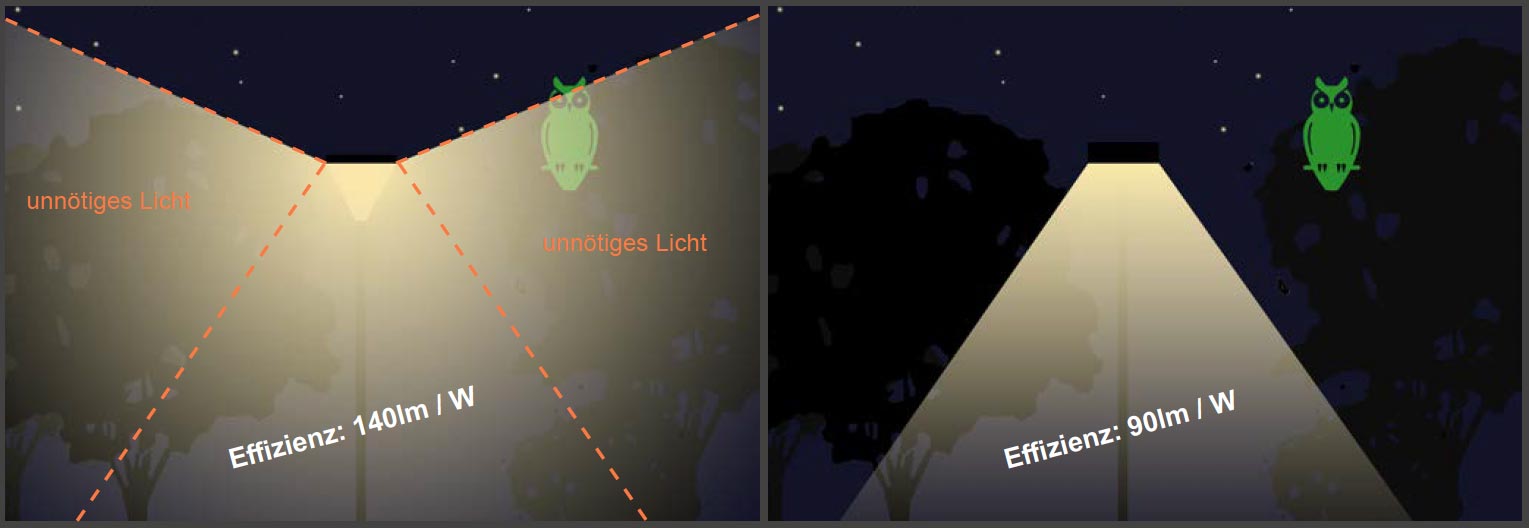
Light should exclusively fall on the surfaces intended to be illuminated.Everything else is stray radiation – and therefore unwanted light immission.
Light emitted into living spaces, treetops, meadows, bodies of water or the sky not only causes energy loss but also disturbs insects, animals, plants and people. Such stray light also contributes significantly to light pollution („skyglow“).
Fully shielded systems – a simple but crucial step
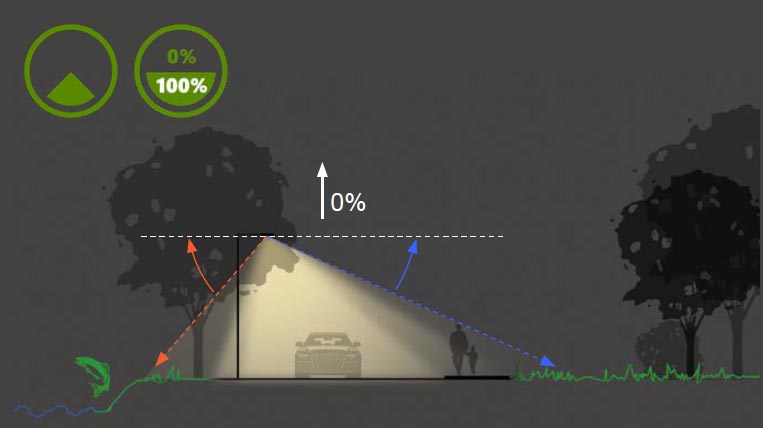
The right course is set right from the start when selecting suitable luminaires. In public spaces, only fully shielded systems (ULR = 0 %) should be used. These prevent light from escaping above the horizontal plane and significantly reduce night-time sky glow.
Equally crucial is correct installation: light heads, for instance on streetlights, should be installed without an upward tilt. Only in this way can it be avoided that light is emitted beyond the target or traffic area, or into the sky.
No exposure of sensitive areas
Light is particularly critical for vegetation and bodies of water – both sensitive ecological zones. Misdirected light can divert insects from their natural flight paths, alter migration and hunting behaviour in birds, and disrupt the activity patterns of amphibians and fish. Plants also react sensitively: continuous light can shift flowering cycles and alter growth processes.
Principle:
Lighting in green or water areas should be avoided or reduced to the absolute minimum necessary – unless there are compelling reasons such as safety, orientation or specific usage requirements that speak against it. In such cases, intensity, duration and spectrum must be carefully coordinated.
Height and distance – small parameters, big impact
Environmental protection guidelines often recommend keeping light points as low as possible to reduce their visibility from a greater distance and avoid light pollution. At the same time, municipalities aim for large light point spacings for economic reasons – which requires broader light distributions.
This wide distribution, however, increases stray light and can lead to increased glare, which makes visual perception more difficult and often requires higher illuminance levels.
In summary:
There is no one-size-fits-all ideal solution – every situation requires individual, precise planning.
The extent to which people and objects are perceived cannot be judged solely by vertical illuminance – but depends on the overall visual comfort and the contrast ratio in the room.
Technology as part of planning – not as an afterthought, but integrated
The selection of suitable lighting systems, their light distribution characteristics, and mast placement are not post-design details, but should be incorporated early into urban and landscape planning concepts. Only then can light be precisely controlled, light pollution avoided, and the quality of stay improved.
Oversized light sources, insufficient shielding or incorrectly placed poles render even the best systems ineffective. Therefore, we demand that lighting technology be integrated, considered early on and holistically in the sense of future-oriented lighting design – with a focus on ecology, safety, energy efficiency and social acceptance.
Guideline for lighting design:
Every misguided light source is a wasted opportunity.
Precise light control reduces glare, improves vision and allows for smaller luminaires – thus effectively reducing energy consumption and CO₂ emissions.
New priorities in lighting design
The classic logic of urban lighting long dictated:
more traffic → more light → more safety → even more light.
This way of thinking is currently running up against ecological, economic, and societal limits. Climate protection, biodiversity, rising energy costs, and growing awareness of light pollution necessitate a radical rethink.
Resource conservation does not mean „achieving less“, but rather planning more purposefully, efficiently and intelligently.
Modern lighting design no longer aims for maximum brightness, but asks: How much light is necessary to ensure safety, orientation and a pleasant atmosphere, without compromising ecological and energy targets?
The quality, distribution, and control of light therefore become the central benchmark – not merely its quantity.
The first and most important step towards resource-friendly lighting is the consistent question: Is artificial light even required at this location? And if so – to what extent?
This site analysis must today be an integral part of every lighting design.
The same applies in urban areas: Lighting must not illuminate an area „pro forma,“ but rather must be oriented towards its use and spatial quality.
Conflict zones – such as intersections, roundabouts or entrances to districts – should be specifically highlighted. They serve not only for safety but also for orientation and urban legibility.
Conclusion: Precise planning of lighting needs reduces light pollution, saves energy – and forms the basis for a sophisticated, resource-efficient lighting concept.
Brightness alone does not guarantee safety. On the contrary: too much light can dazzle, destroy contrast and impair vision.
Resource-efficient lighting therefore relies on:
The central criteria are:
The spectral quality of light directly influences the perception and energy profile of the lighting.
In summary: Each situation must be planned and considered individually. In variable contexts, dynamic spectrum control can be sensible – e.g., 3,000K during busy evening hours and warmer colour temperatures (up to 1,800K) during quiet night hours. Note: Initial studies are already investigating how Artificial Intelligence can efficiently support adaptive spectrum control.
Cities operate on daily, weekly, and annual rhythms. Rigid, constant lighting doesn't do justice to this reality.
Modern control systems allow the light level to be adjusted in real-time – to:
Example and recommendation: After midnight – with low foot and vehicle traffic – the lighting level can be significantly reduced and the spectrum shifted to even warmer colour temperatures.
Our recommendation: due to species protection, we generally do not use anything cooler than 3,000K outdoors – even with high traffic. 3,000K and below is considered warm white, 4,000K is considered neutral white. Therefore, when changing the light spectrum, one can only speak of warm white or even warmer.
This saves energy and reduces light pollution – without compromising safety.
Resource conservation doesn't begin with the light fitting, but with an integrative planning process that includes the following levels:
Usage analysis Who uses which route – when, how often and for what purpose?
Ecological AssessmentWhich rooms are particularly worthy of protection?
Goal definition: What light levels are really needed – where can they be reduced?
Integration of intelligent control: How can light dynamically respond to demand?
Life cycle assessment: Which systems offer the best balance of energy efficiency, maintenance, and sustainability over 15-20 years?
Urban SystematicsCapturing street hierarchies, nodes, and city entrances – to develop a structured lighting logic.
Spatial Perception and EnvironmentThe quality of lighting depends significantly on how the surroundings are designed and considered. Heterogeneous lighting conditions arising from private or commercial lighting can cause glare – and necessitate higher light levels in public spaces. Integrated planning with urban development guidelines can lead to lower lighting requirements in the long term.
The European standard DIN EN 13201 provides valuable guidance – but:
Misapplication or blanket interpretation often lead to oversizing. Lighting classes like ME3 or ME4 must not be used schematically; they must be contextualised and derived correctly.
Municipalities can and should define their own standards that better take into account ecological, social, and economic goals.
In summary – resource conservation is a design task
Resource-efficient lighting is more than just technical fine-tuning – it's an expression of a new attitude in urban design.
She demands:
When cities consistently apply these principles, light becomes a shaping, intelligent, and sustainable instrument: For safety, quality of life, environmental and climate protection – thought together.
Safety arises from perception, not brightness
For a long time, the prevailing idea was: more light creates more safety. However, current research and practice show that what matters is not the quantity of light, but its quality – meaning how well people can perceive their surroundings. Safety arises when spaces offer orientation, contrasts are recognisable, and movements are detected early on. This requires not maximum brightness, but precisely planned lighting conditions.
The aim of modern lighting design is therefore not simply to brighten up rooms, but to make them legible. Only when people can detect other road users, obstacles or potential dangers at an early stage does a genuine sense of security arise – regardless of whether it concerns traffic, crime or quality of stay.
Visual performance as the basis of traffic safety
Physiological visual performance is a key factor for road safety – and doesn't solely depend on illuminance. More important are:
Particularly problematic are excessively high luminance levels or significant differences in luminance: when the eyes adapt to very bright zones, their sensitivity in darker areas decreases – potential hazards are overlooked. High-contrast areas also increase adaptation times and reduce visual reaction capability.
What constitutes good light quality
Good lighting design considers:
Furthermore, the Colour rendering a central role: The higher the colour rendering index (CRI > 80, better > 90), the better people can differentiate objects, clothing or people. This leads to better predictability and increases perceived safety. Colour temperatures in the warm white range are also less distractive to the environment and can be used effectively during quiet night phases.
Social security through spatial awareness
Lighting design also has an influence on the subjective sense of safety. People feel safe where spaces are clearly structured, easily visible, and socially vibrant. Light can support this effect by marking pathways, defining areas, and providing visual orientation.
In high-quality urban spaces with a pleasant ambient lighting, social control increases. This prevents vandalism, strengthens community cohesion, and counteracts effects such as the „broken window theory“. A prerequisite for this is conscious planning that takes into account both quality of stay and social dynamics equally.
Avoid glare – improve visibility
Glare is one of the underestimated risk factors in public lighting. Bright light sources in the field of vision create veil glares on the retina, reduce contrasts, and impair visual performance. This can become particularly dangerous at crossings, bus stops, or junctions.
Central measures for glare reduction include:
The visual environment also plays a role: heterogeneous lighting, for example from commercial or private light sources, can distort luminance ratios. Safe lighting design must therefore always be carried out in the context of the entire room – ideally including the control of commercial and private light emissions.
Context-dependent lighting strategies
Not every space requires the same lighting solution. Transport hubs, train stations or stops present different requirements than residential streets or parks. Time of day, usage and traffic volume also change safety needs.
This way, light is only used where and when it is actually needed – efficiently and on demand.
In summary: think about security holistically
Safety in public spaces is not achieved through maximum lighting, but through intelligent lighting design: situation-specific, resource-efficient, perception-oriented. Good light quality combines physiological vision with psychological safety and ecological consideration.
Cities that consistently pursue this path gain twice over: they create safe, legible spaces while simultaneously setting new standards for sustainability and quality of life at night.
This perspective opens up new possibilities for sustainable urban development. It shows that safety and resource conservation are not opposites – on the contrary: careful lighting design can achieve both goals simultaneously. Cities that adopt this approach not only create safer, but also more liveable and climate-friendly public spaces.
The ecological transformation of urban lighting begins precisely where renovations and planning are currently taking place. Every modernisation is an opportunity to achieve more than just pure efficiency – for example, through targeted light control, protection of biodiversity, and increased quality of stay.
But effective lighting design is more than just technology. It requires a strategic understanding of the space, perception, and social context. Instead of „more light = more safety,“ we rely on intelligent, context-sensitive solutions.
DAY & LIGHT supports cities, local authorities and planners in meeting these new requirements – with expert planning, interdisciplinary experience and a holistic approach to the environment, safety and design.
Our aim: to use light precisely, maximise its effect, conserve resources – and in doing so, create spaces that are equitable for both people and biodiversity.