The outdoor lighting of today's cities is far more than a technical necessity. It is an integral part of architectural planning – a medium that structures space, creates atmosphere, and establishes identity. Those who consider light not merely functionally, but also design-wise, create urban spaces with lasting quality – even after sunset.
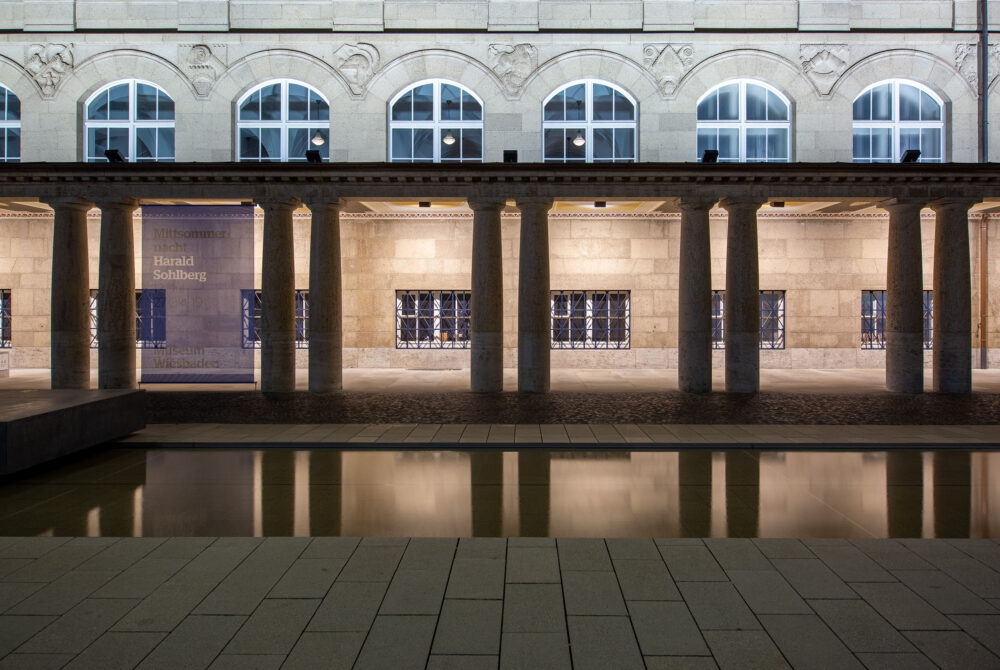
Light defines spatial structures, creates depth layering and accentuates transitions between public and private zones. It lends significance to architectural elements, provides orientation and opens narrative levels. What is crucial is not the light source itself, but its effect within the space:
Shaping perceptual conditions – luminance instead of quantity of light
Ultimately, lighting design leads to the planning of perceptual conditions. In doing so, it is important to grasp the meanings of a room according to its function, use and design quality, and to transfer these into a hierarchy. Lighting design must incorporate and support this hierarchy of meaning – or at least not counteract it.
Luminance plays a central role here: areas with high luminance are visually prioritised and appear dominant. Perceptual planning therefore follows a luminance hierarchy, which is subject to both functional and design aspects.
Different illuminance levels enable spatial zoning, promote orientation, and have a positive effect on human well-being. The reflected light from surfaces is crucial, as it determines our visual perception of the environment.
„The spatial effect is the planning objective, not the amount of light produced.“
Light effect instead of light source – reflectivity of a material
Light is not visible without a surface. It only becomes perceptible through reflection off materials – it makes surfaces readable and spaces experienceable. The way light interacts with materials influences the entire impression of a room. An excess of light accents or uniform illumination overloads the eye, levels out meanings and makes orientation difficult. Good lighting design therefore creates a differentiated interplay of light and shadow. Where there is no light, there is no shadow. Where there is no shadow, depth, variety and differentiation are missing – and thus also orientation.
Architecture lighting – understated and effective
Architectural lighting is successful when it doesn't impose itself. Ideally, it's not discernible where the light is coming from – the architecture takes centre stage, not the luminaire.
The aim is to emphasise the effect of the light, not its source. Luminaires recede, merging with the surroundings. Visual calm is also achieved by dispensing with visual disturbances such as light cones on façades or high self-luminous intensities of luminaires. Through the targeted use of suitable optics and conscious placement, clear spatial impressions are created – without visual disruptive signals.
Modern lighting design takes people and the environment into account. Light emissions influence energy consumption, biodiversity, and human well-being. Design concepts consider:
Light only where it is needed
Standards as a basis – not a limit
Standards such as DIN EN 13201 or guidelines on preventing light pollution provide an important framework for planning. They set benchmarks for efficiency and safety – but do not replace creative aspirations. Good lighting design uses them as tools, not as creative constraints.
Conclusion – Light as an Architectural Language
The power of exterior lighting lies in its spatial effect and in its early integration into the design process. Light creates spaces that are legible, tangible and atmospherically compelling – far beyond their functional purpose.
Those who understand light as a medium of architecture create urban spaces that endure at night and establish identity.

